

What Science Says About Bones, Diet, Aging, and Alcohol
by Dr Nick Delgado, ABAAHP
How can gymnasts and older basketball players like Lebron James age 41 jump higher and land harder and their legs rarely give out?
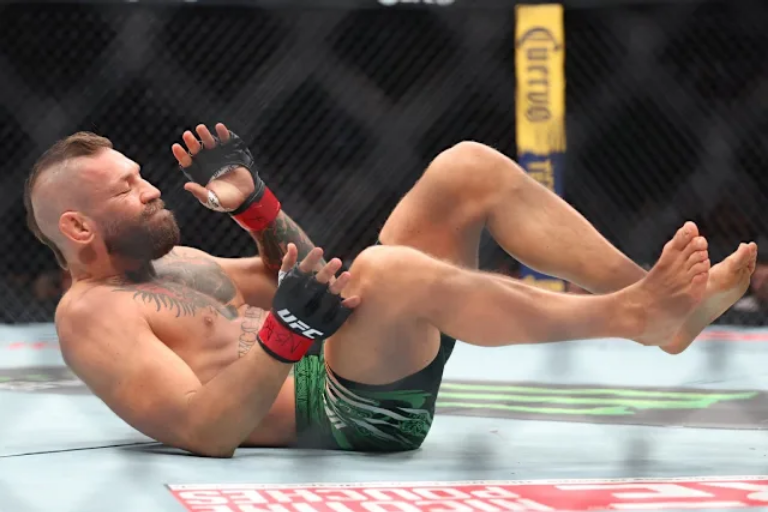
No one outside of McGregor’s medical team knows the exact cause, but several scientifically plausible factors may have contributed. Conor McGregor has publicly revealed that his struggles with heavy alcohol consumption began around 2017. Following his lucrative boxing match against Floyd Mayweather, he launched Proper No. Twelve Irish Whiskey and found himself constantly surrounded by alcohol. He has openly admitted that he fell into a trap of constant drinking during this period. [1, 2, 3]
Prior to the launch of his liquor brand, he was recognized as an elite, sober athlete. Even during his peak, he notoriously drank throughout the fight week leading up to his UFC 229 bout against Khabib Nurmagomedov in 2018. McGregor has continually cycled in and out of sobriety over the years, periodically abstaining from alcohol during specific training camps. [1, 2, 3, 4, 5]
1. Years of Heavy Alcohol Use May Have Weakened Bone and Connective Tissue
Chronic heavy alcohol consumption is a well-established risk factor for osteoporosis, lower bone mineral density, delayed fracture healing, and impaired muscle function.
Conor McGregor has publicly revealed that his struggles with heavy alcohol consumption began around 2017. Following his lucrative boxing match against Floyd Mayweather, he launched Proper No. Twelve Irish Whiskey and found himself constantly surrounded by alcohol. He has openly admitted that he fell into a trap of constant drinking during this period. [1, 2, 3]
Prior to the launch of his liquor brand, he was recognized as an elite, sober athlete. Even during his peak, he notoriously drank throughout the fight week leading up to his UFC 229 bout against Khabib Nurmagomedov in 2018. McGregor has continually cycled in and out of sobriety over the years, periodically abstaining from alcohol during specific training camps. [1, 2, 3, 4, 5]
Research shows alcohol can:
- Damage bone-forming osteoblasts.
- Reduce calcium and vitamin D absorption.
- Lower testosterone levels, which are important for bone and muscle maintenance.
- Increase inflammation and impair tissue repair.
Even if McGregor abstained before this fight, years of heavy alcohol exposure could have had long-term effects on bone quality, tendon strength, and recovery capacity. While this cannot be confirmed as the cause of his injury, it is a recognized risk factor for musculoskeletal weakness.
2. Long-Term Diet and Recovery May Influence Bone Strength
McGregor has followed a high-protein diet centered largely on animal foods.
Current evidence does not prove that animal protein causes osteoporosis or ligament injuries. However, many physicians who advocate whole-food plant-based nutrition—including Dr. Nick Delgado—argue that long-term diets emphasizing fruits, vegetables, legumes, and whole grains provide:
- More potassium and magnesium
- Higher vitamin K intake
- Greater antioxidant and phytonutrient content
- Lower inflammatory burden
- Better overall nutrient density
These factors may support healthier bone remodeling and connective tissue over decades when combined with adequate calcium, vitamin D, and resistance training.
Traditional populations consuming predominantly plant-based diets, such as rural Bantu communities, have historically maintained good skeletal health despite relatively low calcium intake, likely because of multiple lifestyle factors including lifelong physical activity, nutrient-rich diets, lower sodium intake, and overall dietary patterns. Scientists caution that bone health differences between populations cannot be attributed solely to dietary acid-base balance.
3. Age, Prior Trauma, and Years of Elite Competition
At 39 years old, McGregor has accumulated:
- Thousands of rounds of training
- Numerous high-impact fights
- Previous fractures and surgeries
- Decades of repetitive loading on his joints, tendons, and ligaments
Connective tissue generally becomes less resilient with age, and previous injuries can alter movement patterns and increase stress on the opposite limb. It’s possible that his reconstructed left leg had adapted mechanically while the right leg experienced greater loading during the explosive movement, but this remains speculative.
Dr. Nick Delgado’s Approach to Building Stronger Bones
Dr. Nick Delgado recommends a comprehensive strategy for preserving bone and connective tissue that includes:
- A predominantly whole-food, plant-based diet rich in fruits, vegetables, beans, and whole grains.
- Adequate vitamin D, magnesium, vitamin K, and other essential micronutrients.
- Maintaining healthy testosterone and other hormone levels.
- High-intensity, short-duration resistance exercise and mechanical bone loading.
- Regenerative approaches such as peptides and stem cell therapies when medically appropriate.
- Limiting alcohol and other lifestyle factors known to impair bone health.
- High intensity using force, negative wraps that produce more focused stimulation of bones, ligaments and tendons, protecting them from even athletic events that put a stress beyond. Normal’s human activities.
Dr. Delgado’s who is the outspoken host of beyond human
Teaching people advanced biohacking methods to extend a length in the quality of one’s life. His view is that combining optimal nutrition, exercise, hormone balance, and regenerative medicine can help maximize bone density, cartilage health, ligament strength, and recovery.
Could McGregor Return?
Recovery after a major ligament or knee injury depends on the exact diagnosis, surgery (if required), rehabilitation, age, and overall health. No one can reliably predict his recovery timeline.
If he receives appropriate orthopedic care, follows an intensive rehabilitation program, maintains excellent nutrition, optimizes hormone status where medically indicated, and avoids factors that impair healing such as excessive alcohol, his chances of returning to competition may improve.
We are trusting that doctors will do proper bone density tests while it’s more difficult to measure his ligament and strength of cartilage. Get his Vitamin D and K2 blood levels. Measure his cholesterol to correlate with his heavy meat intake.
Lifestyle, functional, precision medicine offers some scientific basis to raise more questions about what really happened to Conor McGregor’s legs. And it is with over 50 years of working to help the aging population and athletes to perform at their best by following Dr. Delgado’s forever young program.
Of course there is no way to know for sure how long it will take Conor to fully recover because long-term studies have not been done yet using these advanced techniques. However antidotal evidence exists and within one or two years we believe Conor could return to the UFC ring as an elite MMA competitor that he once was.
Nick Delgado is the mentor to the longevity coach of Jake Paul and several other doctors and elite athletes. Delgadoprotocol.com/Hub
Find me on youtube.com/delgadoprotocol.com
Follow Dr Nick on Spotify https://open.spotify.com/show/2UuKNF6kMob8cltaOZiCDo
Check out Dr Nick Delgado newest books: Stopagingnowbook.com and “How to Lose Weight without Effort” https://www.amazon.com/dp/B0GZKSDVTS?ref_=cm_sw_r_ffobk_cp_ud_dp_B45CVP43Z25C5CNBS0NG&bestFormat=true
Feel free to participate in our studio, Costa Mesa, or watch us virtual July 22 wednesday foreveryoungevent.com